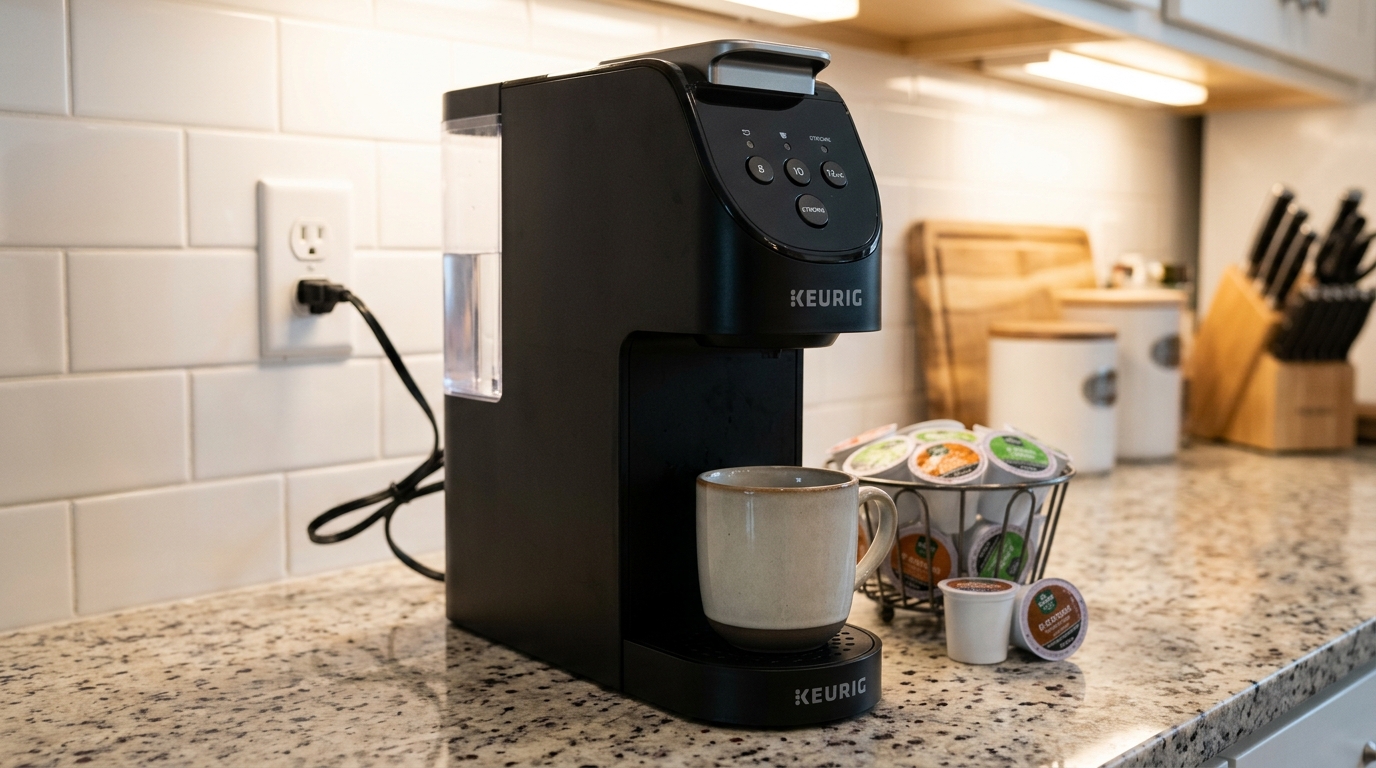
For a lot of households, the morning begins with a quiet negotiation between time and taste. There is a desire for a decent cup of coffee, and there is the reality of a schedule that does not leave much room for measuring grounds, rinsing filters, or waiting for a full pot. Single-serve pod machines exist to smooth over that negotiation, and the Keurig K-Express Single Serve K-Cup Pod Coffee Maker in black is one of the better-known names in that category.
This article is a practical guide rather than a sales pitch. It explains how pod-based brewers generally work, what the K-Express is positioned to offer, how people commonly use machines like it, and what is worth considering before bringing one home. It also looks at the trade-offs, since no coffee maker suits everyone. Specific measurements, capacities, brew sizes, and care instructions should always be confirmed on the manufacturer’s listing and in the user manual, which are the most reliable sources for those details.
Understanding Single-Serve Pod Coffee Makers
A single-serve pod brewer is built around one idea: you place a small, pre-filled pod in the machine, press a button, and the machine heats water and pushes it through the pod to fill a mug. There is no scooping of grounds, no paper filter to replace, and no carafe sitting on a hot plate.
Most machines of this type share a few components:
- A water reservoir that holds the water for multiple cups
- A heating element that brings water to brewing temperature
- A pod holder, where a pod is punctured and water flows through it
- A drip tray and mug platform, where your cup sits
- Controls that let you choose a cup size or brew option
The appeal is convenience and consistency. Each cup is made the same way, and the cleanup is mostly a matter of discarding the used pod. The trade-offs involve the cost and environmental footprint of pods, the limits on cup size, and a certain amount of routine maintenance to keep the machine running well.
What the K-Express Is
The K-Express is part of the Keurig family of single-serve brewers and is designed to be used with K-Cup pods. The “Black” in the title refers to its color, and “Single Serve” tells you it makes one cup at a time rather than a full pot.
Keurig positions this model as a straightforward, user-friendly option. The details that matter most when comparing machines, such as the reservoir size, the range of cup sizes available, whether it offers a stronger brew option, and the dimensions of the unit, are listed on the product page and in the manual. This article describes the category and general features but leaves precise numbers to those sources, because specifications can differ between versions of a model.
Key Features Worth Understanding
K-Cup Pod Compatibility
The core feature of any Keurig brewer is that it brews K-Cup pods, which are small sealed cups filled with ground coffee, tea, or other beverage ingredients. There is a wide variety of pods on the market, including regular and decaf coffee, flavored blends, teas, and hot cocoa. Some people also use reusable filter cups designed for these machines, which allow them to brew their own grounds. If that interests you, check the manufacturer’s guidance on compatibility before buying a reusable filter.
Cup Size Options
Pod machines typically offer a choice of brew sizes so you can fill anything from a small cup to a travel mug. The K-Express listing and manual explain which sizes are available. If you drink from a large mug or a particular travel tumbler, it is worth confirming that it fits beneath the brewer, since the space under the spout is limited.
A Removable Water Reservoir
Many Keurig models have a water tank that detaches from the machine for filling and cleaning. A removable reservoir can be easier to carry to the sink than pouring water into a fixed tank. The capacity determines how many cups you can brew before refilling, so it is a useful detail to check.
Simple Controls
Machines in this category are generally designed to be operated with a few buttons. The goal is to reduce the number of decisions in the morning. Some people appreciate a minimalist interface, while others prefer machines with more settings. The listing and images should show how the controls are laid out.
Compact Footprint
Counter space matters, particularly in smaller kitchens, dorm rooms, and offices. A compact brewer takes up less room than a full drip coffee maker with a carafe. Checking the dimensions against the space where you plan to use it is a worthwhile step.
Quick Brewing
One of the main reasons people choose pod machines is speed. They heat water on demand or hold it ready, and a cup can be brewed in a short time compared with a full pot. The actual timing depends on the machine and how recently it was used.
How People Commonly Use a Machine Like This
The Morning Routine
For many households, the K-Cup brewer is simply the thing that makes the first cup of the day happen with minimal effort. Fill the reservoir, place a pod, choose a size, and press start.
Households With Different Tastes
When one person drinks dark roast, another prefers decaf, and a third wants tea, a pod machine lets each person brew a different cup without making separate pots. That flexibility is one of the most commonly cited reasons for choosing single-serve brewers.
Offices and Shared Spaces
Small offices, break rooms, and shared workspaces often use pod machines because they reduce waste from unfinished pots and make it easy for people to pick their own flavor. Cleaning and descaling still need to be kept up, so someone should be responsible for maintenance.
Dorm Rooms and Apartments
Space is tight in student housing and small apartments. A compact brewer can fit on a shelf or counter without taking over the room, though you will want to check any housing rules about appliances.
Guest Rooms and Secondary Kitchens
Some people keep a single-serve machine in a guest room, basement kitchen, or hobby space for occasional use. Since pods are individually packaged, they keep reasonably well between uses.
Hot Tea, Cocoa, and Other Drinks
Pods are not limited to coffee. Many varieties of tea, cocoa, and other beverages are sold in pod form. If you plan to brew something other than coffee, make sure you clean the machine according to the manual to avoid flavors carrying over.
Iced Drinks
Some people brew a concentrated cup directly over ice to make iced coffee or tea. Whether the machine has a dedicated iced setting varies by model, so check the listing if that matters to you.
Who May Find This Kind of Brewer Suitable
People who value speed and simplicity. If your priority is a cup of coffee with minimal steps, a pod machine matches that goal.
Households with varied preferences. Different pods for different people is a built-in advantage.
Those with limited space. A compact machine is easier to place than a full-size drip brewer.
Occasional coffee drinkers. If you make only a cup or two a day, or only on certain days, single-serve brewing avoids wasting a full pot.
People who dislike cleaning carafes and filters. Pods simplify cleanup considerably.
Anyone setting up a small or temporary kitchen. Single-serve machines are practical for places where a full coffee setup would feel excessive.
On the other hand, a pod brewer may be less suitable for people who brew several cups at once to serve a crowd, for those who prefer to grind and brew fresh beans, or for anyone who is concerned about the ongoing cost and waste associated with individual pods.
Important Things to Consider Before Ordering
Check the Listing for Exact Specifications
Reservoir capacity, cup sizes, dimensions, power details, and included items all vary by model. Read the product page and, if possible, the manual so you know exactly what to expect.
Measure Your Mugs and Your Space
Place your favorite mug or travel tumbler next to the measurements of the brew area. Also measure the counter space and the clearance beneath cabinets, since the reservoir may need to be lifted out for filling.
Think About Pod Costs and Waste
Pods are convenient, but they cost more per cup than buying ground coffee in bulk, and each one is a small piece of packaging. Some pods are recyclable in certain areas, and some have specific recycling instructions, so check local rules and the pod manufacturer’s information. Reusable filter cups offer an alternative for people who prefer their own grounds, if the manufacturer supports their use with the machine.
Consider Water Quality
The quality of water affects both the taste of the coffee and how quickly mineral buildup forms inside the machine. Many manufacturers recommend using fresh, clean water and offer guidance on filtered water. If you live in an area with hard water, you may need to descale more often.
Plan for Regular Maintenance
Single-serve machines need periodic cleaning and descaling. That typically includes washing removable parts, wiping the exterior, running a descaling solution through the machine at intervals the manual recommends, and cleaning the needle or pod holder if it becomes clogged. Skipping maintenance can affect taste, flow rate, and the lifespan of the machine.
Understand the Flavor Profile of Pod Coffee
Pod coffee has its own character. Many people find it perfectly satisfying for everyday use, while coffee enthusiasts who prefer freshly ground beans and manual methods may notice differences. This is largely a matter of personal taste, and it is worth knowing where you stand before you buy.
Keep Safety in Mind
Hot water and electrical appliances call for common-sense care. Place the machine on a stable, dry surface, keep the cord away from water and hot surfaces, and follow the manual’s guidance about unplugging and cleaning. Be careful with hot beverages, particularly around children and pets.
Review the Warranty and Support Information
Warranty terms vary by region and seller. Reading them before you purchase gives you a clearer idea of how problems would be handled.
Think About Noise and Counter Placement
Some machines make noticeable sounds when heating water and brewing. If you plan to keep the brewer in a bedroom, office, or open-plan living area, consider whether that matters to you.
How Single-Serve Pod Machines Compare With Other Coffee Makers
Looking at the broader range of brewing methods helps put a pod machine in context. None of these is better than the rest for everyone.
Single-Serve Pod Brewers
These machines make one cup at a time, with minimal preparation and cleanup. They are well suited to people with differing tastes or low daily volume. The trade-offs include pod cost, waste, and limited cup sizes.
Traditional Drip Coffee Makers
Drip machines brew a full pot at once and use ground coffee and paper or reusable filters. They are efficient for serving several people and generally cost less per cup. They take more steps and more cleanup, and coffee left on a warming plate can change in flavor over time.
Pour-Over and Manual Methods
Pour-over brewing, French presses, and similar methods give you control over variables such as water temperature, pour speed, and brew time. They appeal to people who enjoy the ritual and want to fine-tune flavor. They require more time and attention than a pod machine.
Espresso Machines
Espresso machines use pressure to produce concentrated shots that can be enjoyed on their own or as the base for lattes and cappuccinos. They offer a different beverage altogether and often involve a steeper learning curve and more maintenance.
Capsule Machines From Other Systems
Other brands make machines that use their own capsule formats. These systems are generally not interchangeable with K-Cup pods, so choosing a machine also means choosing the pod ecosystem it uses.
Bean-to-Cup Machines
These grind whole beans and brew automatically. They deliver freshly ground coffee at the push of a button but tend to be larger and require more upkeep.
Instant Coffee and Hot Water Dispensers
For people who want a hot drink with minimal equipment, instant coffee and a kettle or hot water dispenser is an option. It is extremely simple, though the taste and variety differ from brewed coffee.
Habits That Keep a Pod Brewer Running Smoothly
Use fresh water. Emptying and refilling the reservoir regularly helps avoid stale-tasting water.
Run a water-only cycle occasionally. Brewing a cup of plain water between different types of pods, such as coffee and tea, can help reduce flavor carryover.
Descale on schedule. Following the manual’s guidance on descaling helps prevent mineral buildup that can slow flow and affect taste.
Wash removable parts. The drip tray, mug platform, and reservoir benefit from regular cleaning with mild soap and water, if the manual allows.
Wipe the pod area. Coffee grounds and residue can collect around the pod holder, so a quick wipe prevents buildup.
Store pods well. Keep them in a cool, dry place in their original packaging or a container that suits them.
Place the machine carefully. A stable surface, away from the edge of the counter and from water sources, reduces the risk of accidents.
Keep the manual handy. It is the best resource for troubleshooting and care.
Frequently Asked Questions
What kind of pods does the K-Express use?
Keurig brewers are designed for K-Cup pods. The listing and manual provide the details of compatibility, and many pod varieties are marked as suitable for these machines.
Can I use my own ground coffee?
Some people use reusable filter cups made for K-Cup brewers. Check the manufacturer’s guidance to confirm whether this is supported for your model and how to use it correctly.
How many cup sizes does it offer?
The number and sizes of the brew options are listed on the product page and in the manual. Check that they suit the mugs you use.
Does it make iced coffee?
Some people brew directly over ice, using a smaller cup size for a stronger flavor. Whether the machine has a dedicated iced setting depends on the model, so check the listing.
How often do I need to descale it?
Manufacturers typically provide a recommended interval or indicator in the manual. Hard water may require more frequent descaling, so follow the guidance for your model.
Can I use filtered water?
Many people use filtered water for better taste and less mineral buildup. The manual may include recommendations, so it is worth checking.
What should I do if the machine brews slowly or stops mid-cycle?
Check that the reservoir is seated correctly, that there is enough water, and that the pod holder and needle are clean. Descaling can also help if mineral buildup is the cause. The manual and the manufacturer’s support team can help with persistent problems.
Are the pods recyclable?
It depends on the pod type and on local recycling rules. Some pods have specific instructions for separating components, and others may not be accepted in every area. Check the pod manufacturer’s information and local guidelines.
Is it a good fit for an office?
Many offices use pod brewers because they are convenient and tidy. Assigning someone to handle refilling, cleaning, and descaling helps keep the machine in good condition.
Will it fit under my cabinets?
The height of the machine and the space needed to open the reservoir lid or lift out the tank both matter. Compare the dimensions on the listing with the space you have.
How long will it last?
Lifespan depends on use, water quality, and maintenance. Regular cleaning and descaling are widely recommended to help machines stay in good working order.
Where can I find the most reliable specifications?
The manufacturer’s website, the product packaging, and the listing page are the best sources. They provide dimensions, capacities, features, and care instructions in the producer’s own words.
Final Thoughts
A single-serve coffee maker is, in the end, a tool for fitting a daily habit into a busy life. The Keurig K-Express in black is one of many options in the category, and it will suit people who value simplicity, speed, and the freedom to choose a different pod each time.
It is also fair to recognize the trade-offs. Pods cost more per cup than bulk coffee, they add packaging waste that is worth thinking about, and the coffee will not satisfy everyone who prefers a more hands-on brewing method. Whether those trade-offs matter depends on how you drink coffee, how much counter space you have, and what you value in your morning routine.
Before ordering, check the exact specifications, measure your mugs and counter space, think about water quality and maintenance, and decide whether the pod ecosystem fits your habits. Once you have a machine, small routines such as using fresh water, descaling on schedule, and wiping down the pod area go a long way toward keeping it working well.