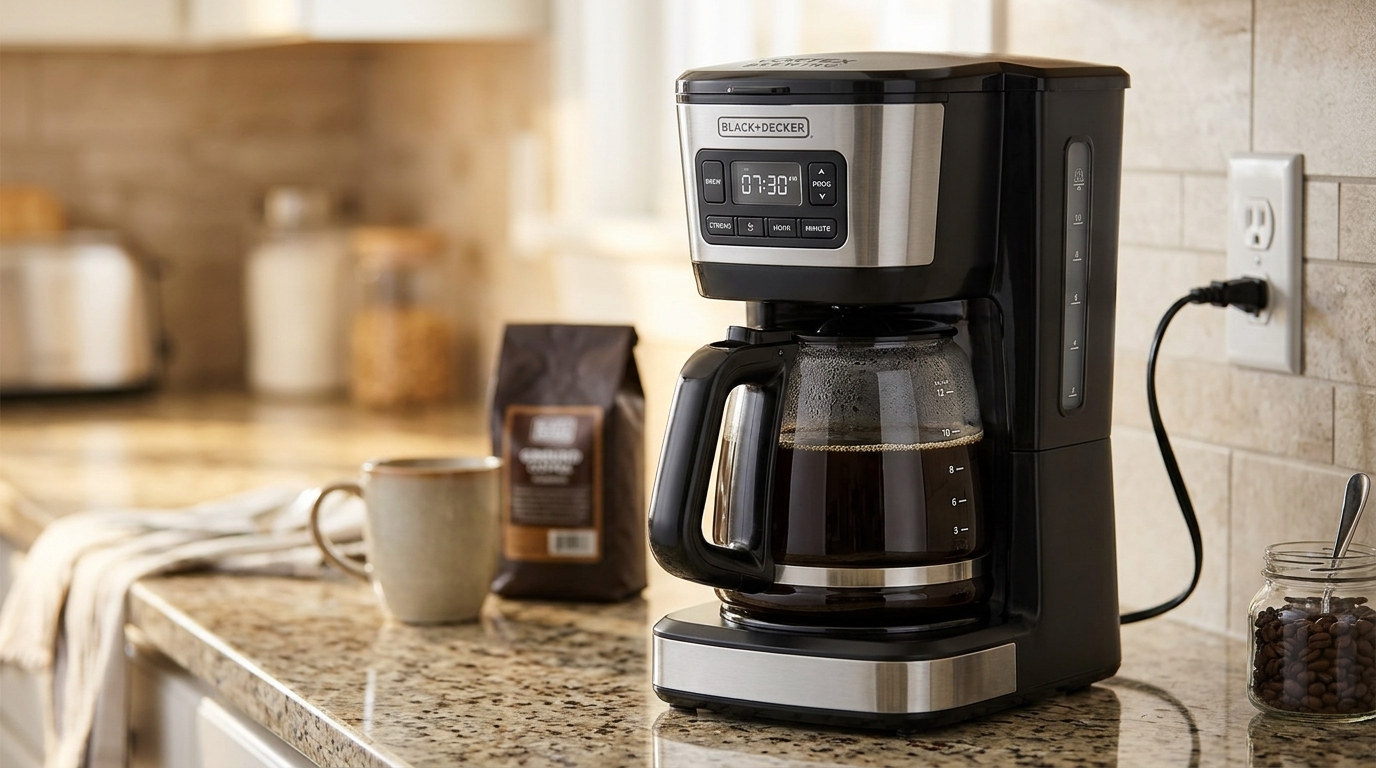
Drip coffee makers do not get much attention anymore. Pod machines are tidy, espresso machines are fashionable, and pour-over setups look good on social media. Yet the humble drip brewer remains one of the most common appliances in kitchens, offices, and break rooms. The reason is simple: when you need several cups of coffee at once, few machines do it as straightforwardly.
The BLACK+DECKER 12-Cup Drip Coffee Maker with Vortex Brewing is a model in that long-running category. The title tells you three things: the brand, the capacity, and a brewing feature called Vortex. This guide looks at what those terms generally mean, how a machine like this fits into daily life, who may find it a sensible match, and what is worth checking before you order.
This is an informational overview, not a verdict on the product. Specifications such as exact carafe volume, available settings, and care instructions can vary between versions, so the product listing and the user manual remain the best sources for those details.
Making Sense of the Title
“BLACK+DECKER”
BLACK+DECKER is a long-established brand of household appliances and tools. A recognizable brand can make it easier to locate manuals, replacement parts, and support, though it does not remove the need to read the specifics for your model.
“12-Cup”
This describes the machine’s capacity. It is worth knowing that the “cup” in coffee maker marketing is often smaller than a standard measuring cup, and many manufacturers define it as a smaller serving, commonly around five ounces. That means a 12-cup carafe may hold fewer mugs of coffee than the number suggests. If you drink from large mugs, it helps to check the carafe volume in ounces or liters on the listing and divide by the size of your own mug.
“Drip Coffee Maker”
A drip machine heats water and releases it over ground coffee held in a filter. Gravity pulls the water through the grounds, and the brewed coffee drips into a carafe below. It is the same basic principle that has been used for decades.
“Vortex Brewing”
This is a feature name. In general terms, it refers to how water is distributed over the coffee grounds. Manufacturers use various designs, such as showerheads or swirling patterns, to wet the grounds evenly so that more of the coffee is in contact with the water. The manufacturer’s description explains what its version does, and how much difference it makes to the taste depends on many factors, including the coffee itself, the grind, and the water.
How a Drip Coffee Maker Works
Understanding the process helps put features into perspective.
You pour water into the reservoir and place a filter, either paper or a reusable one, in the basket. You add ground coffee and start the machine. A heating element warms the water, which travels up a small tube and is released over the grounds. As the water passes through, it extracts flavor and the brewed coffee collects in the carafe. A warming plate under the carafe may keep the coffee hot after brewing.
The simplicity is the appeal. There are few moving parts, and the process is easy to learn. Results depend on the quality and freshness of the coffee, the coffee-to-water ratio, the grind size, the cleanliness of the machine, and the water.
Key Features Worth Understanding
Large Capacity
A 12-cup carafe is designed to serve several people or to supply a day’s worth of coffee for someone who drinks it slowly. It is a good match for households with multiple coffee drinkers, for gatherings, and for offices.
Even Water Distribution
The Vortex feature in the title points to a design intended to spread water over the grounds. Even saturation is generally considered helpful, since uneven wetting can leave some grounds under-extracted. How well any particular design does this in practice depends on the machine and the coffee.
Simple Controls
Drip machines are known for straightforward operation. Many models have a single on/off switch, while others include features such as programmable timers, brew strength settings, or the ability to pause and pour mid-cycle. The listing explains what this model offers.
A Carafe With a Warming Plate
Most drip machines have a heated plate under the carafe. It keeps the coffee warm but can also affect flavor over a long time, since coffee tends to taste different the longer it sits on heat. Some people transfer coffee to an insulated container after brewing.
A Removable Filter Basket
A removable basket makes it easier to dispose of used grounds and to clean the machine. Check whether it is designed for paper filters, a reusable filter, or both.
Water Window or Level Markings
A visible water level indicator helps you fill the reservoir accurately. This matters because the amount of water determines how much coffee you get and how it tastes.
How People Commonly Use a Machine Like This
Family Mornings
When several people need coffee at the same time, a full pot is efficient. Brew once and everyone can pour a cup.
Hosting Guests
Gatherings and brunches often call for more coffee than a single-serve machine can easily produce. A large-capacity brewer fills that need.
Work and Shared Spaces
Small offices and community spaces often rely on drip machines because they handle volume at low cost. Someone should be responsible for cleaning the carafe and basket regularly.
Slow Sipping Through the Day
Some people brew a pot in the morning and drink coffee gradually. If you do this, consider how long coffee stays hot and how it tastes over time, and whether an insulated container might help.
Cold Brew Alternatives and Iced Coffee
Some people brew a stronger pot and chill it for iced coffee. The method works best when the coffee is allowed to cool before being poured over ice, to avoid dilution.
Camping and Holiday Homes
Because the machine is simple, some households keep a spare drip brewer for vacation homes or guest rooms. Check that you have a suitable power source and that the machine is stored clean and dry.
Who May Find This Type of Machine Suitable
Households with several coffee drinkers. A single brew can serve everyone.
People who like simplicity. Drip machines are easy to learn and use.
Those who entertain. A 12-cup capacity is helpful when hosting.
Anyone who prefers ground coffee in bulk. Drip machines work with ordinary ground coffee, which is generally less expensive per cup than pods.
Offices and shared spaces. The format suits groups.
People who want a dependable, familiar appliance. Drip brewers have been around for a long time and are widely understood.
On the other hand, a large drip machine may be less suitable for people who make only a cup or two a day, for those who want espresso-based drinks, or for anyone with very limited counter space.
Important Things to Consider Before Ordering
Check the Carafe Volume and Your Mug Size
Compare the carafe volume on the listing with the amount you usually drink. If you tend to brew only a little, a smaller machine may reduce waste. If you drink from large mugs, a 12-cup machine may yield fewer servings than the name implies.
Understand the Features Included
Look for details about programmability, brew strength options, pause-and-serve functions, automatic shut-off, and any other controls. If a feature matters to you, confirm that this specific model has it.
Consider the Filter Type
Find out whether the machine uses paper filters, a reusable filter, or both. Paper filters need an ongoing supply, while reusable ones need regular washing. Each affects the taste and body of the coffee a little differently.
Think About Water Quality
Using fresh, clean water improves flavor and reduces mineral buildup inside the machine. If your water is hard, you may need to descale more often.
Plan for Cleaning and Descaling
Drip machines collect coffee oils and mineral deposits over time. Washing the carafe and basket regularly, wiping the warming plate, and descaling as recommended in the manual all help the machine perform well and keep coffee tasting fresh.
Be Mindful of the Warming Plate
Heat can change the flavor of coffee left on it for long periods. If you often leave coffee sitting, consider transferring it to an insulated container. Make sure the machine has an automatic shut-off if you are concerned about leaving it on.
Measure Your Counter and Cabinet Space
Drip machines can be tall, and you need room to lift the lid and fill the reservoir. Compare the dimensions on the listing with your available space.
Keep Safety in Mind
Hot water, steam, and a hot warming plate can cause burns. Place the machine on a stable, dry surface, keep the cord clear of water and heat, and keep children and pets away from hot surfaces. Unplug the machine before cleaning.
Keep Expectations Realistic
A drip machine produces everyday coffee that many people enjoy. It will not produce espresso or the highly controlled results of specialized manual methods. Whether it satisfies you depends on your taste and expectations.
Review the Warranty and Support Information
Terms vary by seller and region. Read them before you buy, and note how to contact support if needed.
How This Style of Machine Compares With Other Options
No category is best for everyone. Here is how the main alternatives differ.
Large-Capacity Drip Coffee Makers
These brew a full pot at once and are economical for groups. They are not designed for single cups, and coffee left on a warming plate can change in flavor over time.
Single-Serve Pod Machines
These make one cup at a time with minimal effort and offer variety through pods. They cost more per cup and create packaging waste, and they are not ideal for serving several people at once.
Grind-and-Brew Machines
These grind whole beans and brew in one appliance, offering fresher coffee with more cleaning needs. They are typically larger and more complex.
Pour-Over and Manual Methods
Pour-over, French press, and similar methods give you control over variables and can produce excellent coffee. They take more time and attention, and they are less convenient for large groups.
Espresso Machines
Espresso machines produce concentrated coffee and are the basis for lattes and cappuccinos. They involve a learning curve, more equipment, and more maintenance.
Percolators
Percolators cycle boiling water through grounds repeatedly. Some people like the traditional method and the strong coffee it produces, though results differ from drip brewing.
Thermal Carafe Brewers
Some drip machines use an insulated carafe instead of a warming plate, which keeps coffee hot without direct heat. They can be a good choice if you leave coffee sitting for a while, and the carafe design is worth considering.
Instant Coffee
Instant coffee is the simplest option, requiring only hot water. The flavor and variety differ from brewed coffee.
Habits That Keep a Drip Coffee Maker Working Well
Use fresh, cold water. Fresh water tastes better and heats more evenly.
Measure the coffee. A consistent ratio helps produce consistent results. Many people start with a standard ratio and adjust to taste.
Use a suitable grind. Drip machines generally work best with a medium grind. Too fine can clog the filter, while too coarse can produce weak coffee.
Store coffee well. Keep it in an airtight container in a cool, dark place.
Wash the carafe and basket after each use. Coffee oils can leave residue that affects flavor.
Wipe the warming plate. Spills can bake on and become hard to remove.
Descale on schedule. Follow the manufacturer’s recommendations.
Leave the lid open to dry. This helps reduce odors in the reservoir.
Turn off or unplug when not in use. Follow the manual’s guidance.
Frequently Asked Questions
How much coffee does a 12-cup machine make?
The “cup” in coffee maker marketing is often smaller than a standard cup, commonly around five ounces. Check the carafe volume on the listing to see how many mugs of your size it will fill.
What is Vortex brewing?
It is a feature name that generally refers to how water is distributed over the grounds. The manufacturer’s description explains how its design works.
Does it have a timer or programming function?
That depends on the model. Check the product listing for details on programmable features.
Can I use a reusable filter?
Many drip machines accept reusable filters, but compatibility depends on the design of the basket. Check the manual.
What grind is best?
Drip machines generally work well with a medium grind. You can adjust based on taste, and coffee packaging often indicates whether it is suitable for drip brewing.
How do I descale it?
The manual provides instructions, which commonly involve running a descaling solution or a vinegar-and-water mixture through the machine, followed by rinsing. Follow the manufacturer’s guidance for your model.
Will it fit under my cabinets?
Compare the dimensions on the listing with your space, including the room needed to open the lid and fill the reservoir.
Is it safe to leave on all day?
Check the manual for information on automatic shut-off and warming plate use. As a general rule, it is a good idea not to leave appliances running unattended for long periods.
Why does my coffee taste bitter or weak?
Taste depends on the coffee, grind, ratio, water, freshness, and cleanliness. Adjust one variable at a time, and make sure the machine is clean. The manual and the seller’s support team can help with persistent problems.
Is it safe around children and pets?
Hot water, steam, and a hot warming plate can cause burns. Keep the machine on a stable surface and keep cords out of reach.
Where can I find reliable specifications?
The product listing, the packaging, and the manufacturer’s website are the best sources. They provide capacities, features, and care instructions in the producer’s own words.
Final Thoughts
The drip coffee maker has lasted because it solves a common problem well: making enough coffee for several people without fuss. The BLACK+DECKER 12-Cup Drip Coffee Maker with Vortex Brewing is one of many machines in that tradition, and it will interest households, offices, and hosts who want a straightforward way to brew a full pot.
Before ordering, check how much coffee the carafe actually holds, find out which features are included, think about filters and cleaning, and measure your space. Keep expectations realistic about what drip coffee is and is not, and remember that small habits, such as using fresh water, measuring coffee, and descaling on schedule, have a surprisingly large effect on how a pot of coffee tastes.