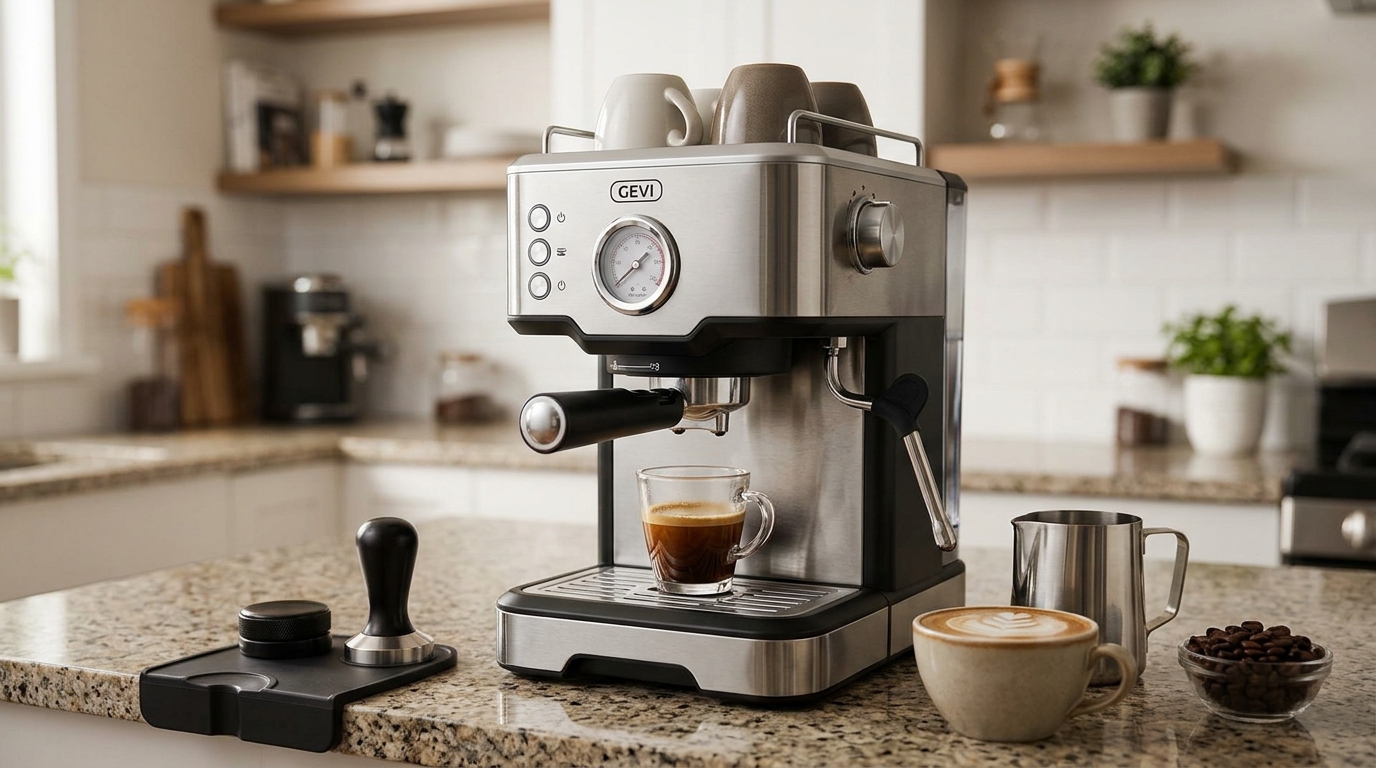
There is a moment in many coffee drinkers’ lives when a drip pot or a pod machine no longer feels like enough. Maybe it comes after a good cappuccino at a café, or after noticing how much a few specialty drinks add up over a month. The thought arrives quietly: what if I could make something like this at home?
Home espresso machines exist to answer that question, and they come in an enormous range of sizes and styles. The Gevi 20 Bar Compact Espresso Machine for Home sits in the compact, entry-oriented part of that range. Its title promises the ability to make lattes and cappuccinos, and it highlights a pressure figure of 20 bar.
This article is meant to be a balanced, educational guide. It explains what a compact espresso machine generally does, how to interpret the numbers in a listing, what the learning curve tends to look like, and what to confirm before ordering. It is not a verdict on this specific product, and it does not replace the manufacturer’s listing and manual, which are the right sources for exact capacities, included accessories, and safety instructions.
Reading the Title
“Gevi”
Gevi is the brand name on the listing. As with any brand, the product page is the place to confirm the seller, the model number, and how to find the manual and support resources.
“20 Bar”
Bar is a unit of pressure. The figure on espresso machine listings usually refers to the maximum pressure the pump is capable of producing. Espresso extraction itself is generally described as working best at a lower pressure than the peak number printed on the box, often around nine bar at the coffee, and many machines include mechanisms to regulate the pressure during brewing. So 20 bar is best understood as a descriptor of the pump rather than a promise about the quality of the espresso. It is a clue, not a measure of results.
“Compact”
Compact suggests the machine is designed to take up less counter space than a full-size model. That can be a real advantage in smaller kitchens, but it may also mean smaller water tanks and less room for larger cups. Check the dimensions and capacities on the listing.
“Espresso Machine for Home”
This positions the machine for household use rather than a commercial setting. Home machines are built for lower volume and are generally simpler to operate than commercial equipment, though they still require learning and care.
“Latte, Cappuccino Coffee Maker”
The title indicates that the machine is intended for milk-based drinks. That usually means it includes a steam wand or milk frothing component, although the exact design is described on the product page.
How an Espresso Machine Works
Understanding the basic process makes it easier to see what a compact machine can and cannot do.
Espresso is made by forcing hot water through finely ground coffee under pressure. The result is a small, concentrated shot with a layer of foam on top called crema. A typical home machine has a water tank, a pump, a heating system, and a portafilter, which is the handled basket that holds the ground coffee. You grind the coffee, place it in the basket, press it down in a step called tamping, lock the portafilter into the machine, and start the brew.
Milk drinks add another step. A steam wand releases hot steam into milk, warming it and creating foam. The espresso and steamed milk are then combined in different proportions to make a latte, cappuccino, flat white, or similar drink.
Several variables influence the result: the freshness of the beans, the fineness of the grind, the amount of coffee in the basket, how firmly it is tamped, the water temperature, and the extraction time. Home espresso rewards experimentation, and it can take a few attempts to find what works with your beans and your machine.
Key Features Worth Understanding
A Pump Described as 20 Bar
As noted, this number describes the pump’s maximum capability. Reading the product description for any mention of pressure regulation or a pressure-limiting design helps you understand how the machine manages extraction.
Compact Design
A smaller body suits limited counter space. It may also be easier to move and store. The trade-off can be smaller water capacity and a smaller drip tray, which means more frequent refilling and emptying.
Milk Frothing Capability
For latte and cappuccino drinks, a frothing feature is essential. The type of steam wand or frother affects how easy it is to create foam and how much control you have over texture. Check the listing for descriptions and images of the frothing component.
Portafilter and Baskets
Machines usually include a portafilter with one or more baskets, such as single-shot and double-shot sizes. Some also include a pressurized basket, which is designed to be forgiving of grind size and tamping, while others use non-pressurized baskets that give more control but demand more precision. The listing and manual should explain what is included.
Water Tank and Drip Tray
A removable water tank is easier to fill, and a drip tray with a removable grate makes cleaning simpler. Capacity matters, particularly if you make several drinks in a row.
Controls
Compact machines may use simple buttons or switches, while others have more advanced displays. Consider whether you prefer a straightforward interface or more control over settings.
Warm-Up Time
Espresso machines need time to heat up before brewing, and some offer faster heating than others. If speed matters to you, look for details in the specifications.
How People Commonly Use a Machine Like This
Everyday Espresso Shots
The simplest use is a shot or two of espresso to sip on its own or to start the day. Good beans, a suitable grind, and a bit of practice make a difference.
Lattes and Cappuccinos
Milk drinks are the main draw for many buyers. Steaming milk takes practice, and results vary with the type of milk and your technique.
Americanos and Long Coffees
Adding hot water to an espresso shot produces a drink similar in length to filter coffee. It is a common way to enjoy espresso if you prefer a larger cup.
Flavored Drinks
Syrups, cocoa, and spices can be added to espresso and steamed milk to make mochas and other café-style drinks.
Iced Espresso Drinks
Some people pour espresso over ice, add milk, and enjoy an iced latte. It is a simple way to adapt espresso for warmer weather.
Entertaining
A home espresso machine can be a conversation starter when guests visit. Keep in mind that making drinks one at a time takes a little while, so plan accordingly if you are serving several people.
Small Kitchens and Offices
A compact machine can serve as a small coffee station in an apartment, a dorm room, or a home office. Check any housing or workplace rules about appliances.
Who May Find This Type of Machine Suitable
People curious about making espresso at home. A compact machine can be a way to explore the hobby without a large commitment of space.
Lovers of lattes and cappuccinos. If milk-based drinks are your favorite, a machine with a steam wand lets you make them at home.
Small-space dwellers. A compact design suits tight counters.
Households that enjoy a bit of ritual. Making espresso involves several steps, and some people find that part of the pleasure.
People who want to cut down on café visits. Making drinks at home can be a rewarding alternative, though it does involve equipment and supplies.
On the other hand, a compact espresso machine may be less suitable for people who want one-button convenience with no learning curve, for those who need to make many drinks quickly, or for anyone who does not want to deal with grinding, tamping, and cleaning.
Important Things to Consider Before Ordering
Remember That a Grinder Matters
Espresso depends heavily on the grind. If you buy pre-ground coffee, make sure it is labeled for espresso. If you grind at home, a grinder that can produce a fine, consistent grind is generally important. Many people find that the grinder is as influential as the machine in the quality of the result. Check whether the machine includes a grinder, since most compact espresso machines do not.
Understand the Learning Curve
Espresso is not a push-and-pour experience. Expect to experiment with dose, grind size, and tamping, and expect some early shots to taste weak, bitter, or uneven. That is normal, and the manual and basic guides can help you find your footing.
Check What Is Included
Look at the listing for the portafilter, baskets, tamper, scoop, and any other accessories. Some of these may be basic, and you may want to upgrade them over time.
Look at the Steam Wand Details
If milk drinks are your main goal, consider how the steam wand works, how it is positioned, and whether it is easy to clean. Learning to texture milk takes patience, and a well-designed wand helps.
Plan for Cleaning and Maintenance
Espresso machines need regular care. That includes rinsing the portafilter and baskets, emptying the drip tray, wiping the steam wand immediately after use, and descaling as recommended. Milk residue on a steam wand can harden quickly, so a quick wipe and a short purge of steam after each use is a common practice.
Think About Water Quality
Using fresh, clean water helps flavor and reduces mineral buildup. Hard water can lead to scale inside the machine, so follow the manual’s guidance on water and descaling.
Be Careful With Steam and Heat
Steam wands and hot surfaces can cause burns. Keep hands and faces clear of the wand tip when steaming, use a suitable pitcher, and keep children and pets away from the machine while it is in use. Place the machine on a stable, dry surface, and keep the cord clear of water and heat.
Check Cup Clearance
Measure the space between the portafilter spout and the drip tray to make sure your cups fit. Taller mugs and travel cups may not fit beneath a compact machine.
Keep Expectations Realistic
A compact home machine can produce enjoyable espresso and milk drinks, but results will not necessarily match those of a professional café setup with commercial equipment and trained baristas. That is not a flaw so much as a difference in scale and purpose.
Review the Warranty and Support Information
Terms vary by seller and region. Because brands differ in how they handle support, look for clear contact details, a manual, and information about repairs or replacements.
How This Style of Machine Compares With Other Options
No category is best for everyone. Here is how the main options differ.
Compact Semi-Automatic Espresso Machines
These machines give you control over grinding, dosing, tamping, and timing, and they usually include a steam wand. They offer room to learn and improve, but they require time and practice.
Pod and Capsule Espresso Machines
These use pre-filled capsules, making preparation quick and consistent. They have fewer variables to manage, though they involve ongoing capsule costs and offer less flexibility.
Super-Automatic Machines
These grind, tamp, and brew at the push of a button, and many also froth milk. They are convenient but are generally larger and involve more maintenance.
Moka Pots and Stovetop Brewers
These produce a strong, espresso-like coffee on the stove using steam pressure. They are inexpensive and simple but do not produce true espresso.
AeroPress and Similar Manual Devices
Some manual brewers can make concentrated coffee that works well in milk drinks. They are portable and low-cost and rely on technique rather than machine pressure.
Single-Serve Pod Coffee Makers
These brew regular coffee cups quickly with minimal effort. They are convenient for everyday coffee but do not make espresso.
Standalone Milk Frothers
Electric frothers heat and whisk milk and can be paired with a moka pot, AeroPress, or other strong coffee. They are easier to master than a steam wand but do not make espresso themselves.
Café Drinks Made Outside the Home
Buying espresso drinks from a café offers skilled preparation and no equipment to maintain. It costs more over time and requires leaving the house.
Habits That Make Home Espresso Easier
Use fresh beans. Coffee tastes best when it is relatively fresh, and storing beans in an airtight container away from light and heat helps.
Change one variable at a time. If a shot tastes off, adjust the grind, dose, or tamp one step at a time so you can see what makes a difference.
Keep notes. Writing down what you tried and how it tasted can speed up learning.
Preheat cups. Warm cups help drinks stay hot longer.
Purge the steam wand. Release a brief burst of steam before and after use to clear condensation and milk residue.
Wipe the wand immediately. Milk dries quickly and can clog the steam holes.
Rinse the portafilter and baskets after each use. Fine grounds can build up and affect flow.
Descale regularly. Follow the manual’s recommendations to prevent mineral buildup.
Be patient. Espresso is a skill, and improvement comes with practice.
Frequently Asked Questions
What does 20 bar mean on an espresso machine?
Bar is a unit of pressure, and the figure usually refers to the pump’s maximum capability. Espresso extraction itself generally works best at a lower pressure, so the number is better treated as a description of the pump than a guarantee of quality.
Does this machine include a grinder?
The title does not mention one. Most compact espresso machines do not include a grinder, so check the listing and plan to buy espresso-ground coffee or a separate grinder.
Can I use coffee pods in it?
That depends on the machine’s design. Check the listing to see whether it accepts pods, capsules, ground coffee, or a combination.
Can it make lattes and cappuccinos?
The title says it is intended for those drinks, which generally means it has a steam wand or frothing component. Check the product page for details on how it works.
Is it difficult to learn?
Espresso has a learning curve. Many people take several attempts to find a grind, dose, and technique they like, and steaming milk takes practice too.
How often should I clean it?
Rinse the portafilter and baskets after each use, wipe the steam wand immediately after steaming milk, and empty the drip tray regularly. Descale according to the manual’s schedule.
Can I use plant-based milk for frothing?
Many people do, but results vary depending on the type and brand. Some experimentation may be needed, and the manual may offer suggestions.
Will it fit under my cabinets?
Check the height of the machine and the clearance needed to fill the water tank. Compare the dimensions on the listing with your available space.
Is it safe around children and pets?
Steam, hot water, and hot surfaces can cause burns. Keep the machine on a stable surface, keep cords out of reach, and supervise children when it is in use.
Why does my espresso taste bitter or weak?
Grind size, dose, tamping, bean freshness, water temperature, and extraction time all affect taste. Adjust one variable at a time and make sure the machine is clean. The manual and the seller’s support team can help with persistent problems.
Where can I find reliable specifications?
The product listing, the packaging, and the manufacturer’s website, if one is provided, are the best sources. They list capacities, accessories, and safety information in the producer’s own words.
Final Thoughts
An entry-level espresso machine is, for many people, the start of a new kitchen hobby. It offers a path toward lattes and cappuccinos at home, along with a fair amount of trial and error. The Gevi 20 Bar Compact Espresso Machine is one of many options in this space, and it is likely to appeal to people who want a small machine, enjoy milk-based drinks, and are willing to learn a few new skills.
Before ordering, take time to understand what the 20 bar figure does and does not mean, find out what is included in the box, think about how you will grind your coffee, and be realistic about the learning curve and the cleaning routine. Measure your space and your cups, and review the warranty and support details. With those steps in place, you can decide whether a compact espresso machine fits the way you like to make coffee.