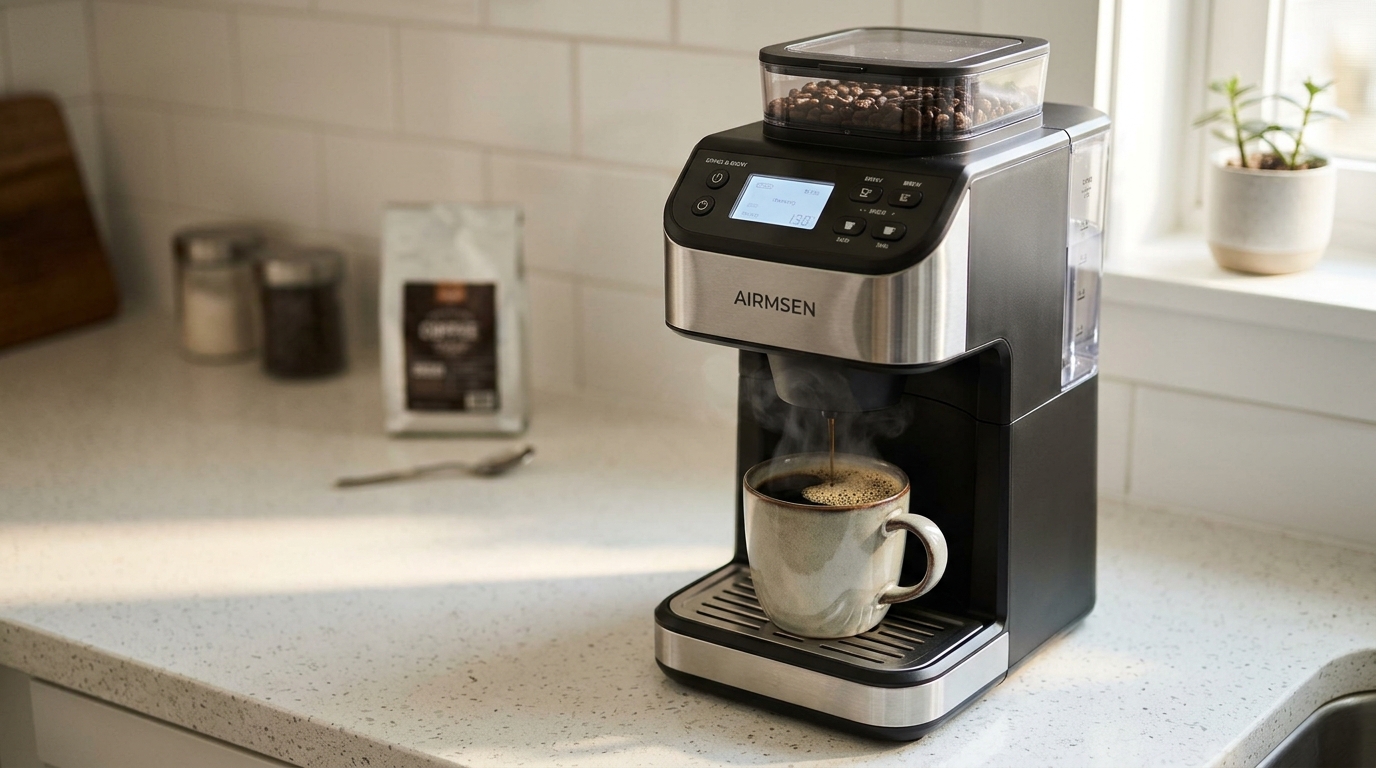
Anyone who has opened a bag of whole coffee beans knows the smell. It is stronger, brighter, and more complex than anything that comes out of a can of pre-ground coffee a few weeks later. That difference is the reason so many coffee drinkers eventually ask the same question: is it worth grinding beans at home?
The answer usually comes with a catch. A separate grinder takes counter space, makes noise, and adds one more step to a morning that is already short. Grind-and-brew machines try to remove that catch by putting the grinder and the brewer in one appliance. The AIRMSEN Grind and Brew Coffee Maker, a single-serve model with a built-in grinder, belongs to that category.
This article looks at what a machine like this generally does, how it fits into a daily routine, who may find it practical, and what is worth checking before ordering. It is an informational overview, not a verdict on any specific unit, and it does not replace the manufacturer’s listing and manual, which are the right places to confirm capacities, settings, cleaning instructions, and safety details.
Reading the Title
“AIRMSEN”
AIRMSEN is the brand name on the listing. If the name is new to you, spend a moment on the product page to see who sells it, whether a manual is available, and how to reach support.
“Grind and Brew”
The phrase describes the main idea: the machine grinds whole beans and then brews the coffee from those fresh grounds, usually in a single cycle. Instead of scooping pre-ground coffee, you add beans and let the machine handle both steps.
“Single Serve”
This tells you the machine makes one cup at a time rather than a full pot. It is a good match for small households or for people who drink one or two cups a day.
“Built-In Grinder”
The grinder is part of the appliance. What the listing does not say in the title is what type of grinder it is, how many grind settings it has, how much bean capacity it holds, or how loud it is. All of those matter, and they are worth looking up on the product page.
How a Grind-and-Brew Machine Works
Understanding the sequence helps put the features in context.
You fill the water reservoir and place whole beans in a hopper or chamber. When you start a cycle, the grinder crushes the beans to a particular size. The grounds then move into a brewing basket or filter area. Heated water passes through them, and the finished coffee drips into your mug. Some machines let you choose cup size, strength, or grind coarseness, while others offer fewer options.
The central appeal is that the beans are ground right before brewing. Coffee is often described as tasting fresher when ground immediately before use, because grinding exposes more surface area to air and flavor compounds fade over time. That is a general principle rather than a guarantee of any specific result, and personal taste varies widely.
Key Features Worth Understanding
Freshly Ground Coffee Each Time
The most obvious feature is the ability to brew from whole beans. People who care about aroma and flavor often find this appealing, and it opens the door to the wide variety of whole-bean coffees sold by roasters and grocers.
Single-Cup Output
Because the machine brews one cup at a time, it uses only the amount of coffee needed for that cup. This reduces waste for people who do not finish a full pot, and it suits households where tastes differ.
Grind Control
Some grind-and-brew machines let you adjust the coarseness or the amount of coffee used, and some also offer strength settings. The more control a machine offers, the more you can tailor the cup, though it may also take some experimentation. The listing should explain what adjustments are available.
Bean Hopper and Water Reservoir
Capacity affects how often you need to refill. A larger hopper holds more beans, and a larger reservoir holds more water. Compact machines may have smaller capacities, which is a trade-off for saving space. Check the specifications to see how they fit your habits.
Reusable or Built-In Filtration
Grind-and-brew machines use some form of filter to hold the grounds. It could be a reusable mesh filter, a paper filter, or another arrangement. The type affects flavor, cleanup, and ongoing supply needs, so find out which one this model uses.
A Compact, All-in-One Design
Having the grinder and brewer in one body saves space compared with owning a separate grinder and brewer. It also means fewer cords and fewer items to store.
How People Commonly Use a Machine Like This
Daily Fresh Cups
For people who drink coffee every day, grinding beans on demand can become a satisfying routine. Fill the hopper, press a button, and enjoy a cup made from freshly ground beans.
Trying Different Beans
Whole-bean coffee comes in countless varieties, from different origins to different roast levels. A machine with a built-in grinder makes it easy to explore them without buying a separate grinder.
Small Kitchens and Dorm Rooms
When space is limited, one appliance that does two jobs is practical. Check the dimensions against your counter and cabinets.
Offices and Home Workspaces
A single-serve machine can serve as a personal coffee station at a desk or in a small office. Be mindful of noise, since grinding can be loud in quiet environments.
Occasional Guests
If you have a visitor who wants a cup of coffee, a single-serve brewer allows you to make one without preparing a whole pot.
Hot or Iced Coffee
Some people brew a stronger cup and pour it over ice. Whether the machine has a dedicated iced setting depends on the model, so check the listing if that is important to you.
Mixing Regular and Decaf
Because each cup is brewed individually, you can switch between regular and decaf beans, although it is wise to clear any leftover grounds from the grinder when changing to avoid mixing. The manual may include tips on this.
Who May Find This Type of Machine Suitable
People who like the idea of freshly ground coffee but do not want a separate grinder. An all-in-one machine reduces the equipment needed.
Small households. Single-cup brewing avoids waste and fits a modest daily routine.
Those with limited counter space. One appliance takes less room than two.
Coffee drinkers who like variety. Whole beans let you try different roasts and origins easily.
Anyone who wants to simplify the morning. The machine handles grinding and brewing in one go.
On the other hand, a grind-and-brew machine may be less suitable for people who make several cups at a time, for those who want precise control over every variable, such as water temperature and grind size, or for anyone who is sensitive to the sound of a grinder in the morning.
Important Things to Consider Before Ordering
Check the Grinder Details
Find out what kind of grinder the machine uses, how many grind settings it offers, and how much coffee it can grind at once. Grinder design affects consistency, noise, and how easy the machine is to clean. If the listing does not explain these points, you may want to ask the seller.
Think About Noise
Grinding whole beans makes noise, and the level varies between machines. If you share a space with others who are sleeping or working, consider how that might affect them.
Understand Cleaning Requirements
Coffee beans contain natural oils that can build up on the grinder and in the brewing path. Regular cleaning of the grinder, the filter, and the brewing basket helps maintain flavor and performance. The manual explains how to clean the machine and which parts are removable.
Look at the Filter Type
If the machine uses a reusable filter, you will need to rinse it regularly. If it uses paper filters, you will need to keep a supply on hand. Either way, the choice can affect the taste and body of the coffee.
Check Cup Sizes and Mug Clearance
Measure the space under the spout to make sure your favorite mug or travel tumbler fits. Also look at the range of cup sizes the machine can brew.
Consider Bean Storage
Whole beans stay fresher when stored in a cool, dark, airtight container. Leaving beans in the hopper for long periods may affect freshness, so many people add only what they will use in a few days. Check the manual for guidance.
Plan for Water Quality and Descaling
As with any machine that heats water, minerals can accumulate inside over time. Using fresh water and following the descaling recommendations in the manual helps the machine last and keeps flavors clean.
Watch for Heat and Electrical Safety
Place the machine on a stable, dry surface, keep the cord away from water and hot surfaces, and be careful with hot liquids, especially around children and pets. Unplug the machine before cleaning, as the manual instructs.
Keep Expectations Realistic
A grind-and-brew machine offers convenience, and many people enjoy the result. It will not necessarily match the flavor of a hand-brewed cup made with a high-end grinder and a carefully controlled process. How much that matters depends on your taste and priorities.
Review the Warranty and Support Information
Terms vary by seller and region. Since the brand may be less familiar, look for clear contact information, a manual, and details on how problems are handled.
How This Type of Machine Compares With Other Options
No category is best for everyone. Here is how the main alternatives differ.
Single-Serve Grind-and-Brew Machines
These grind and brew in one appliance, make one cup at a time, and use whole beans. They save space and effort, but combined machines may not match dedicated equipment for each step, and cleaning the grinder is part of the routine.
Single-Serve Pod Machines
Pod machines are quick and clean, and they offer lots of variety through pre-filled pods. They involve ongoing pod costs and packaging waste, and they do not use whole beans.
Full-Size Grind-and-Brew Drip Machines
These grind beans and brew a full pot. They suit households that drink several cups at once. They are larger than single-serve models and not ideal for one cup at a time.
Standard Drip Coffee Makers
These brew a pot from pre-ground coffee. They are simple and efficient for groups but lack the freshly ground feature.
Separate Grinder With Manual Brewing
Using a standalone grinder with a pour-over, French press, or similar method gives more control over variables and often produces excellent results. It requires more equipment, time, and attention.
Espresso Machines
Espresso machines use pressure to produce concentrated shots and are the basis for many café drinks. They offer a different beverage altogether and involve a learning curve and maintenance.
Bean-to-Cup Automatic Machines
These automate grinding and brewing, and some also make espresso-style drinks and froth milk. They are generally larger and involve more upkeep.
Instant Coffee
Instant coffee is the simplest option and needs only hot water. The flavor and variety differ from brewed coffee, which may or may not matter to you.
Habits That Keep a Grind-and-Brew Machine Performing Well
Store beans properly. An airtight container in a cool, dark place helps beans stay fresh. Add only what you plan to use in a short time to the hopper.
Empty and clean the grounds area. Leftover grounds can become stale and affect the next cup.
Rinse removable parts regularly. Wash the filter, basket, and drip tray as the manual directs.
Clean the grinder as recommended. Coffee oils build up over time, and a periodic cleaning keeps flavors clean and performance steady.
Use fresh water. Replace the water in the reservoir regularly rather than letting it sit.
Descale on schedule. Follow the manufacturer’s advice to prevent mineral buildup.
Experiment gradually. If the machine allows grind or strength adjustments, change one variable at a time so you can tell what makes a difference.
Keep the manual accessible. It is the best resource for troubleshooting and care.
Frequently Asked Questions
What does a grind-and-brew coffee maker do?
It grinds whole coffee beans and brews coffee from them in one machine, typically in a single cycle.
Does this machine use a burr grinder or a blade grinder?
The title does not say. Check the product listing and manual to find out what type of grinder it uses and how many settings it offers.
Can I use pre-ground coffee in it?
Some machines allow pre-ground coffee, while others are designed only for whole beans. Check the listing and manual for guidance.
How loud is the grinder?
Noise levels vary by machine and are not always described in listings. If noise is a concern, look for details or ask the seller.
How often should I clean the grinder?
Manufacturers usually recommend regular cleaning, since coffee oils and fine particles can build up. Follow the schedule and method given in the manual.
Can I make iced coffee with it?
Some people brew a stronger cup and pour it over ice. Whether the machine has a specific iced setting depends on the model, so check the listing.
How should I store the beans?
Keep them in an airtight container in a cool, dark place. Avoid leaving large amounts of beans in the hopper for long periods.
Will the machine fit under my cabinets?
Check the height and the clearance needed to fill the reservoir and hopper. Compare the dimensions on the listing with the space you have.
How often do I need to descale it?
The interval depends on the model and on your water hardness. The manual provides guidance, and hard water generally calls for more frequent descaling.
What if the coffee tastes weak or bitter?
Several factors can affect taste, including bean freshness, grind setting, coffee amount, water quality, and how clean the machine is. Adjust one variable at a time, and make sure the machine is clean. The manual and the seller’s support team can help with persistent issues.
Is it safe around children and pets?
Hot liquids and electrical appliances need care. Keep the machine on a stable surface and keep cords out of reach.
Where can I find reliable specifications?
The product listing, the packaging, and the manufacturer’s website, if one is provided, are the best sources. They list capacities, features, and safety information in the producer’s own words.
Final Thoughts
For people who enjoy the smell and flavor of freshly ground coffee but do not want a counter crowded with equipment, a grind-and-brew machine offers an appealing compromise. It folds two steps into one appliance and keeps the focus on a single, freshly made cup.
The AIRMSEN Grind and Brew Coffee Maker is one of several options in this category, and it is likely to appeal to small households and anyone who wants to move from pre-ground coffee to whole beans without much fuss. As with any appliance, the most useful preparation happens before ordering: check what type of grinder it has, how it is cleaned, how much it holds, and whether it fits your space and your mugs. Be realistic about the results, and plan for the regular cleaning that grinders and brewers need.