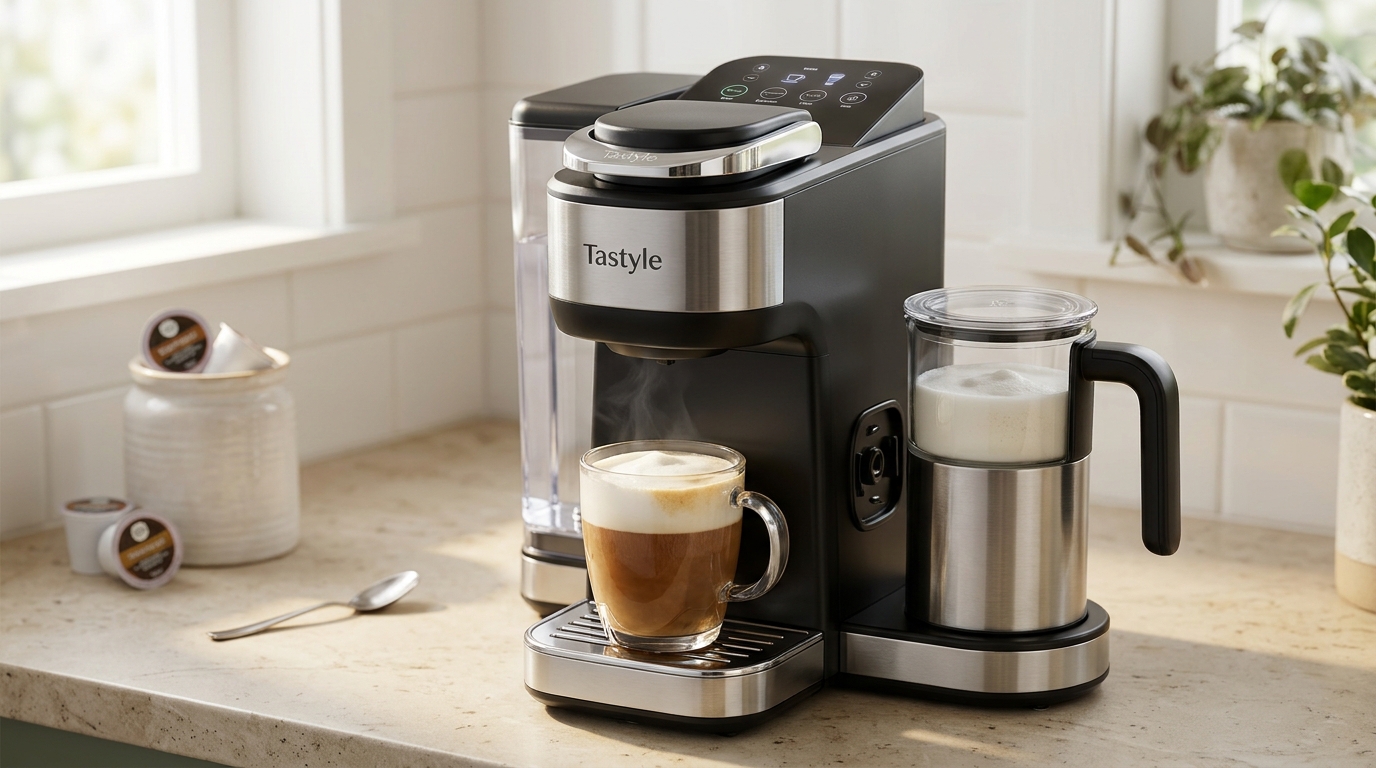
Plenty of people have a coffee-shop order they never quite manage to replicate at home. It might be a latte with a soft layer of foam, a cappuccino with a bit of texture on top, or simply a mug of coffee with warm, frothy milk stirred in. The coffee itself is often the easy part. The milk is where things get complicated, because frothing usually means another gadget, another thing to wash, and another place on the counter that is already crowded.
That gap is what a combination machine tries to close. The Tastyle Single Serve Coffee Maker with Built-in Detachable Milk Frother brings a single-cup brewer and a milk frothing component into one appliance. The word “detachable” in the title suggests the frother can be removed, which usually matters for cleaning.
This guide takes a measured look at what this type of machine is, how it might be used, who may find it practical, and what is worth checking before ordering. It is general educational information, not a recommendation, and it does not replace the product listing and manual, which are the right sources for exact capacities, compatible coffee formats, and safety instructions.
What the Title Tells You
“Tastyle”
Tastyle is the brand name on the listing. As with any brand you may not know well, it is worth checking the product page for the seller’s information, the model number, and the manual or support resources.
“Single Serve Coffee Maker”
This means the machine is designed to make one cup at a time rather than a full pot. People often choose single-serve brewers for convenience, small households, or a variety of tastes in one home. What the title does not say is which coffee format the machine uses. Single-serve brewers may use pods, loose ground coffee, capsules, or a combination. The listing should specify, and it is one of the most important details to confirm.
“Built-in Detachable Milk Frother”
This is the distinguishing feature. A frother is a component that heats and aerates milk, creating foam for drinks such as lattes and cappuccinos. “Built-in” suggests it is part of the machine, and “detachable” suggests you can remove it, most likely for filling, pouring, or cleaning. How it heats milk, how much it can hold, and whether it offers separate hot and cold frothing options are all described by the manufacturer.
How Single-Cup Brewing and Milk Frothing Work Together
It helps to understand the two processes separately.
Brewing. The machine heats water and moves it through coffee, whether that is in a pod, a filter basket, or a capsule. The result drops into a mug placed under the spout. Because only one cup is made at a time, the machine can be compact and quick.
Frothing. A frother warms milk and introduces air, which creates foam. Many frothers use a spinning whisk inside a small jug or chamber. Some heat the milk as they whisk, while others have separate settings for hot foam, cold foam, or heated milk without foam. The texture of the result depends on the type of milk, its temperature, and the machine’s design.
Combining the two in one appliance means you can brew a cup and froth milk with a single device, which can save counter space compared with owning two separate machines. The trade-off is that a combination machine does two jobs, and it may not match a dedicated machine for either one in every respect. It is also one more thing to keep clean.
Key Features Worth Understanding
Single-Cup Convenience
Single-serve brewing is a good match for people who make one or two cups a day, who have differing preferences within a household, or who do not want to waste coffee from a pot that sits unfinished.
An Integrated Frother
Having the frother connected to the same appliance makes it easy to prepare milk-based drinks without reaching for a second device. For people who often make lattes, cappuccinos, or flavored coffees with milk, that may be an attractive feature.
Detachable Design
A removable frother can be easier to fill, pour from, and wash. Because milk leaves residue that can sour if left sitting, accessible parts that can be rinsed thoroughly are a practical advantage. The manual will explain which parts are dishwasher-safe, if any, and which should be hand-washed.
Space-Saving Potential
One machine instead of two can free up counter space, particularly in small kitchens, dorms, and offices. Check the dimensions on the listing against your available space, since combination machines can be taller or wider than simple brewers.
Controls and Settings
Machines like this typically have buttons for brewing and for frothing. The number of settings varies, and so does how intuitive the layout is. The images and description on the listing help you picture how it works.
Water Reservoir
Most single-serve brewers include a water tank. Capacity determines how many cups you can make before refilling. A removable reservoir is generally easier to fill at the sink.
Ways People Commonly Use a Machine Like This
Lattes and Cappuccinos
The obvious use is a milk-based coffee drink. Brew a stronger cup of coffee, froth milk, and combine them in a mug. Results depend on the coffee strength, the type of milk, and the machine’s capabilities.
Flavored Coffee Drinks
Adding syrups, cocoa, or spices to coffee and frothed milk can create café-style flavors. Many people enjoy experimenting at home, and the frother can make these drinks feel more finished.
Hot Chocolate and Milk-Based Beverages
A frother can heat and whisk milk for hot chocolate, chai-style drinks, and similar beverages. Check the manual for what the frother is intended to handle, since thicker mixtures may not be suitable.
Iced Coffee With Cold Foam
If the frother offers a cold setting, it may allow you to top iced coffee with cold foam. Whether the machine does this depends on the model and is spelled out in the listing.
Warming Milk for Other Uses
Some people use frothers to warm milk for kids, for cereal, or for cooking. Again, follow the manufacturer’s guidance about what the frother is intended for, and be careful with hot milk.
Small Households and Shared Spaces
Offices, dorm rooms, and apartments often benefit from a compact machine that can make a range of drinks. A combination appliance can serve as a small coffee station on its own.
Entertaining Guests
For a few guests, a machine that handles both coffee and frothed milk can make it simple to offer a latte or cappuccino without a full espresso setup.
Who May Find This Type of Machine Suitable
People who enjoy milk-based coffee drinks. If lattes and cappuccinos are on your regular menu, a built-in frother may be a practical feature.
Small-space dwellers. Combining brewing and frothing in one appliance can reduce clutter.
Households with different tastes. One person may want black coffee, another a frothy latte, and a third a hot chocolate. A flexible machine can serve all three.
Occasional café-style drinkers. If you make milk-based drinks now and then, a single machine can be easier than owning several devices.
People moving beyond basic coffee. Those who want to try more variety without investing in a full espresso machine may find a combination appliance a reasonable stepping stone.
On the other hand, such machines may be less suitable for people who brew several cups at a time for a crowd, for those who want true espresso with high-pressure extraction, or for anyone who does not want the extra cleaning that comes with frothing milk.
Important Things to Consider Before Ordering
Confirm Which Coffee Format It Uses
This is the first question to answer. Does the machine brew from pods, from ground coffee, from capsules, or from more than one of these? If it uses pods, which kind? Pod and capsule systems are not all interchangeable, so confirm compatibility before buying supplies.
Check the Frother’s Capacity and Functions
Look at how much milk the frother can handle, whether it heats milk, whether it offers cold frothing, and whether it can be used independently of the brewer. Capacity affects how many drinks you can make at once.
Understand What “Detachable” Means in Practice
Find out which parts come off, how they reattach, and how they should be cleaned. The manual should explain which components are suitable for the dishwasher and which need hand washing.
Plan for Cleaning
Milk residue is among the more demanding things to clean in a kitchen appliance. Rinsing the frother soon after use, washing it as directed, and letting it dry thoroughly helps prevent odors and buildup. If you are not prepared for a quick cleaning routine after each drink, a frother may become more trouble than it is worth.
Think About Milk Choices
Different milks froth differently. Dairy milk, plant-based milks, and lactose-free options each behave in their own way, and results vary by brand and temperature. If you use a particular alternative milk, you may need to experiment. The manual may offer guidance on suitable types.
Mind the Heat
Hot water and hot milk can cause burns. Place the machine on a stable, dry surface, keep the cord out of the way, and be careful when removing and pouring from the frother, particularly around children and pets.
Keep Realistic Expectations About Results
A combination machine can make coffee and frothed milk, but it is not the same as a commercial espresso machine with a steam wand. The drinks can be enjoyable and convenient, though they may differ from what you get in a coffee shop. How much that matters depends on your preferences.
Consider Water Quality and Descaling
Hard water can lead to mineral buildup inside any machine that heats water. Follow the manufacturer’s advice on water type and descaling schedule to help the machine continue to work well.
Measure Your Space and Mugs
Check the height and width of the machine, and make sure the mugs or travel cups you use fit beneath the spout. Consider whether you need to lift out the frother or reservoir under cabinets.
Review the Warranty and Support Information
Terms vary by seller and region. Because the brand may be less familiar, look for clear contact details, a manual, and information on how to get help if something goes wrong.
How This Style of Machine Compares With Other Options
No category is best for everyone. Here is how the main alternatives differ.
Combination Single-Serve and Frother Machines
These put brewing and frothing in one appliance, which saves space and simplifies milk-based drinks. They involve more parts to clean, and they may not match dedicated machines in every function.
Basic Single-Serve Brewers
Simple pod or capsule machines make coffee quickly with minimal cleanup. They do not froth milk, so people who want foam typically add a separate frother.
Standalone Milk Frothers
Dedicated electric frothers heat and whisk milk and may offer several settings. They can be paired with any coffee maker. They add another device to store and clean.
Handheld Whisk Frothers
These small battery-powered whisks are inexpensive and portable. They do not heat milk, so you would warm it separately. They suit people who want occasional foam with little equipment.
Espresso Machines With Steam Wands
These produce true espresso and use steam to heat and texture milk. They give more control but involve a learning curve, more maintenance, and more counter space.
Capsule Espresso Machines
Some capsule systems produce espresso-style drinks and have optional milk components. They use their own capsule formats and are generally not interchangeable with other systems.
Traditional Drip Coffee Makers
Drip machines brew a full pot and suit households that drink several cups at a time. They do not froth milk and are not designed for single cups.
Manual Methods
French presses, pour-over setups, and similar methods give you control over the brewing process. They require time and attention, and milk would be handled separately.
Everyday Habits That Keep the Machine Working Well
Rinse the frother right away. Milk dries and sticks quickly, so a prompt rinse prevents buildup.
Follow the manual for washing. Check which parts are dishwasher-safe and which are not, and avoid abrasive scrubbers that could damage surfaces.
Dry parts completely. Letting components air-dry reduces the chance of odors.
Use fresh water. Emptying and refilling the reservoir regularly helps keep the water fresh and reduces mineral buildup.
Descale on schedule. Follow the manufacturer’s recommendations to maintain flow and taste.
Wipe the brewing area. Coffee residue can collect around the pod holder or filter basket, so a quick wipe keeps it tidy.
Do not overfill the frother. Milk expands when frothed, so respect the maximum fill lines.
Keep the manual nearby. It is the best resource for troubleshooting and care.
Frequently Asked Questions
What kind of coffee does this machine use?
The title does not say. Check the product listing and manual to find out whether it uses pods, ground coffee, capsules, or a combination.
Can I use plant-based milk in the frother?
Many people do, but results vary depending on the type and brand. The manual may suggest suitable options, and some experimentation may be needed to find what works best.
Is the frother dishwasher-safe?
It depends on the design. Some parts may be dishwasher-safe and others may need hand washing. Follow the manual’s instructions.
Can I froth milk without brewing coffee?
Some machines allow the frother to be used independently, while others are designed to work together. Check the product details.
Does it make true espresso?
Single-serve coffee makers generally brew coffee differently from high-pressure espresso machines. If true espresso is important to you, look for a machine described as an espresso maker and read what the manufacturer says about it.
Can it make iced drinks or cold foam?
That depends on the frother’s settings. Check the listing for cold frothing options.
How often should I clean the frother?
Most manufacturers recommend cleaning after each use, since milk residue can build up quickly. Follow the instructions for your model.
How often should I descale the machine?
Descaling intervals depend on the model and your water hardness. The manual provides guidance, and hard water usually calls for more frequent descaling.
Is it safe around children and pets?
Hot liquids and surfaces require care. Keep the machine on a stable surface, keep cords out of reach, and supervise children when hot drinks are being prepared.
What if the milk does not froth well?
Milk type, temperature, and the amount of milk can all affect results. Check fill levels, try a different milk, and confirm that the frother is clean and assembled correctly. The manual and the seller’s support team can help with persistent issues.
Where can I find reliable specifications?
The product listing, the packaging, and the manufacturer’s website, if one is provided, are the best sources. They list capacities, compatible coffee formats, and safety information in the producer’s own words.
Final Thoughts
A single-serve coffee maker with a built-in milk frother is, at heart, a convenience product for people who like variety in their cup. It aims to put a latte or cappuccino within easy reach without the cost, space, and learning curve of a full espresso setup. For households that enjoy milk-based drinks and want to keep their counters uncluttered, that can be an appealing proposition.
The Tastyle Single Serve Coffee Maker with Built-in Detachable Milk Frother is one of several options in this space. Before ordering, it is worth confirming which coffee format it uses, how the frother works, how the parts are cleaned, and whether the size fits your kitchen and your mugs. Be realistic about the drinks it can produce, and be ready to commit to a short cleaning routine, because milk is the part of the process that most needs attention.